Your cart is currently empty!
Why your browser wallet matters more than you think: practical DeFi security for multi‑chain users
Whoa! I know — browser wallets sometimes feel like an afterthought. Really. They sit in the corner of your browser, quietly signing transactions while you hustle between DEXs and NFT drops. My instinct said they were fine for small trades. Initially I thought a single seed phrase and a sticky note would do the job, but then I watched a friend lose a chunk of ETH to a malicious site and—yeah—my view changed fast. On one hand it’s convenient; on the other, convenience often masks risk, especially when you jump across chains and networks without a clear safety posture.
Here’s the thing. Shortcuts compound. Phishing links pop up in Discord. Chain switches happen without a clear prompt. You click ‘Confirm’ and later you realize the token approval you granted was effectively permanent. Hmm… that part bugs me. Seriously, it does. So let’s walk through real, practical defenses that actually match how most of us use DeFi: in the browser, across chains, with a mixture of custody and self‑custody tools.
First, a quick mental model. A browser extension wallet has three key surfaces: the seed/private key storage, the signing UX (what you see when asked to sign), and the network/configuration layer (which chain you’re connected to). Each surface can fail in different ways. For example, seed exposure is catastrophic but rare if you use strong hygiene; signing UX deception is subtle and common; network layer trickery can lead you to sign legitimate-looking messages for wrong chains. On the other hand, good tools make those surfaces obvious and auditable. You want a wallet that separates account management from site permissions, that shows chain context clearly, and that makes gas/approval details explicit.
Practical hardening checklist for your browser extension wallet
Okay, so check this out—start with the basics. Backup your seed properly. Not on cloud photos. Not in a text file. Paper, metal plate, whatever you trust when the house goes up in a fire (okay, maybe not that dramatic, but you get it). Use a passphrase (a.k.a. seed + passphrase). It adds a protective layer that many users skip because setup is a little more annoying, though actually it saves you later when an attacker gets the raw 12 or 24 words.
Move slowly when granting approvals. Slow down. Every approval can be scoped. Some wallets let you set allowance limits; others ask you to confirm unlimited approvals for ERC‑20 tokens. That’s a red flag. If a dApp asks for infinite allowance, treat it like handing someone the keys to your car. Consider tools that show and revoke existing allowances without forcing you into a gas war. Also: be skeptical when a site asks you to switch networks. Sometimes it’s legit. Sometimes it’s a phishing trick to make the wallet show amounts in a token on a fake chain.
Multi‑account posture helps. Use hot wallets for day‑to‑day trades. Use a separate cold or hardware-backed account for large holdings. This is the same idea as not keeping your life savings in your daily checking account. Storing a few stablecoins or collectibles in a hardware‑protected account prevents the typical ‘signed transaction’ scam from burning your entire portfolio. And yes, I’m biased toward using hardware keys for significant balances — they add friction, but they prevent many attack vectors that rely on the extension having direct signing access.
Apps and permissions matter. Grant only the minimal permissions required. If a site asks for account access and you don’t plan to use its smart features, decline. Revoke permissions periodically. I’m not 100% sure why more users don’t do this; habit, probably. On the upside, modern wallets are getting better at making these controls visible and simple. One more thing: check how the wallet displays transaction details. Does it show the destination address? The method name? The calldata? Good wallets surface this info in plain English, not just hex strings.
Why multi‑chain support needs to be explicit
Multi‑chain is great for liquidity and lower gas costs. It also multiplies the attack surface. Each chain has its own token standards, explorer URLs, and potential router exploits. Something felt off the first time I saw a wallet auto‑switch networks without a clear prompt. I thought it was convenient. Actually, wait—let me rephrase that: convenience without confirmation is a vulnerability.
So how do you manage it? Use a wallet that clearly labels the active chain and refuses silent switches. Watch for discrepancies between the chain shown in the dApp and the chain the extension reports. If anything mismatches, stop and confirm on the wallet UI itself. When bridging assets, copy the contract addresses manually from trusted explorers if you must, and verify them. Yes, it’s tedious — but it’s cheaper than recovering from an exploited bridge or a rug pull. And by the way, use reputable bridges and confirm you’re on the official bridge domain (oh, and by the way… bookmark it).
Another practical tip: use per‑chain accounts or account nicknames. Seeing ‘Mainnet — Savings’ is way more calming than ‘Account 1’. It reduces mistakes when you swap chains quickly during a trading session. This is human factors stuff. People make errors when context is missing. Good wallet UX reduces those errors by aligning labels with mental models.
Tools and wallets I look at as a user
I’ll be honest: I evaluate wallets by how they make safety visible. Does the wallet surface approvals? Does it provide an approval manager? Can it group transactions? Is it clear about which account signs what? Those features separate tools that are “cute” from tools that are actually useful in a sticky situation.
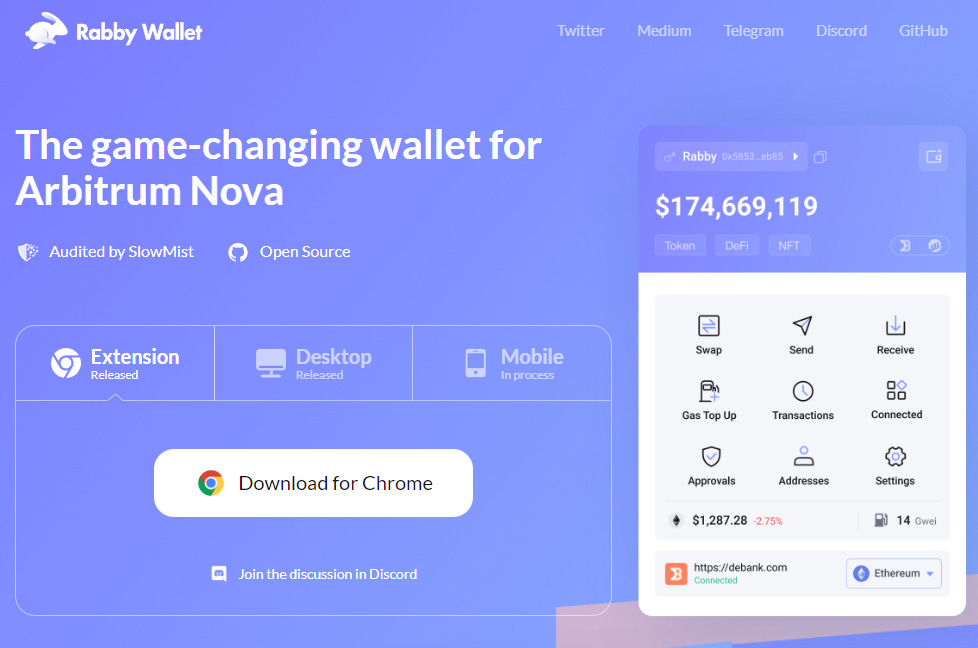
If you’re shopping for a browser extension wallet that takes multi‑chain security seriously, check how it handles approvals, chain switching, and hardware integration. One wallet I recommend trying is rabby. I’ve used it in heavy multi‑chain sessions and appreciated its permission controls and clearer transaction prompts. Not perfect. But helpful. My instinct said it would help reduce accidental approvals — turns out that instinct had merit.
Also experiment. Create a small test wallet, mint a cheap test token, and run through the flows you normally do. If a wallet makes it easy to see call details, that’s a plus. If it hides important fields behind jargon or hex, be wary. And remember: even great wallets can’t protect you from social engineering or giving permissions on purpose.
Common questions from real users
How do I tell if a transaction is malicious?
Short answer: check the method and recipient. Longer answer: when the wallet shows the transaction, look for unfamiliar contract calls (approve, transferFrom, swapExactTokensForTokens). If the destination is a proxy or unfamiliar contract, pause. If approvals request ‘infinite’ amounts, treat it as suspicious. On one hand some legitimate dApps ask for broad allowances; on the other, attackers exploit that behavior—though actually, careful inspection usually gives you a clue. When unsure, cancel and research.
Should I use a hardware wallet with a browser extension?
Yes for larger balances. Hardware keys keep private keys offline while letting you use the extension as the UX layer. It’s not flawless UX wise, but it prevents many signing attacks. I use a hardware key for big positions and a hot wallet for quick swaps. That balance works for me — and it might for you too.
Leave a Reply